The Value Index is a fraction. The numerator is function, appearance and durability; the denominator is CapEx plus ten years of OpEx. Material downgrading only ever reaches the front half of that denominator: 0.6 mm architectural veneer becomes paper foil, a 60,000-cycle damped runner becomes hardware whose carton states no cycle rating, the bid comes in 10% lower and the numerator moves down with it. Runners bought that way tend to start binding around month 26, and re-running 300 keys costs parts, labour and the room nights lost while a floor is worked through — usually more than the hardware saving that bought them. Value Engineering edits the other part of the denominator: load-path geometry, machining strategy, hardware graded by frequency of use. Nothing the guest touches daily changes.
Under low-bid pressure, B2B procurement strategies often produce something else under the same label — “Value Trashing” — where specified architectural veneer becomes paper foil, internal framing loses section or count, and a 60,000-cycle hydraulic slide is replaced by hardware carrying no published cycle rating. None of the three is easy to read off a tender drawing, and all three lower the CapEx number. The difference typically surfaces in Year 2 as joint loosening, edge delamination and drawer binding, with the repair and the Out-of-Order (OOO) nights returning to the owner’s account.
The framework used here is Lawrence D. Miles’ Value Methodology together with a Total Cost of Ownership (TCO) model, with the editable surface confined to three places: visible and hand-contact materials stay as specified, load-path geometry is redrawn, and hardware is graded by frequency of use.
1. Value Engineering Function-to-Cost (F/C) Mathematical Model
The scientific core of Value Engineering lies in systematically elevating the Value Index :
+-------------------------------------------------------------------------+
|     Value Engineering (VE) vs. Material Value Trashing Model            |
+-------------------------------------------------------------------------+
|  Value Index (V)                                                        |
|    ▲                                                                    |
|    │ ┌────────────────────────────────────────────────────────────────┐ |
|    │ │ [Sunder Professional VE]: F (100% Aesthetic) / C (Process -18%)│ |
|    │ │ ➔ Value Index V expands to 1.45 (Active Capital Optimization)  │ |
|    │ ├────────────────────────────────────────────────────────────────┤ |
|    │ │ [Conventional Material Downgrade]: F (-40%) / C (-10% Bid)     │ |
|    │ │ ➔ Value Index V collapses to 0.67 (Severe Long-term OpEx Drain)│ |
|    │ └────────────────────────────────────────────────────────────────┘ |
|   0└────────────────────────────────────────────────────────► Vectors   |
+-------------------------------------------------------------------------+
+-------------------------------------------------------------------------+
| Sunder 4-Tier Substructural & Hardware VE Optimization Matrix |
+-------------------------------------------------------------------------+
| [Aesthetic Shell]: 100% Specified 0.6mm Natural White Oak Veneer + 3H |
| ┌─────────────────────────────────────────────────────────────────┐ |
| │ [Zero surface downgrade: 100% preserves designer luxury touch] │ |
| ├─────────────────────────────────────────────────────────────────┤ |
| │ [Internal Core]: FEA-optimized CNC multi-ply birch box girders │ |
| │ (+25% bending stiffness, -30% wasteful timber) │ |
| ├─────────────────────────────────────────────────────────────────┤ |
| │ [Hardware Alloc]: Austrian 60,000-cycle runners on high-wear │ |
| │ Standard commercial hinges on service doors │ |
| └─────────────────────────────────────────────────────────────────┘ |
+-------------------------------------------------------------------------+2. 4 Core Value Engineering (VE) Manufacturing Standards
Sunder strictly confines Value Engineering to internal structural topology and automated process optimization:
1. 100% Preservation of Visual & Tactile Interfaces
- Specified architectural stone, PVD metal coatings, natural wood veneers and contract FR textiles are excluded from the substitution list. Where a face material genuinely has to change, it returns to the designer for written approval rather than being settled inside the VE round.
2. Substructural CNC Interlocking Joints & Box-Girder Re-Engineering
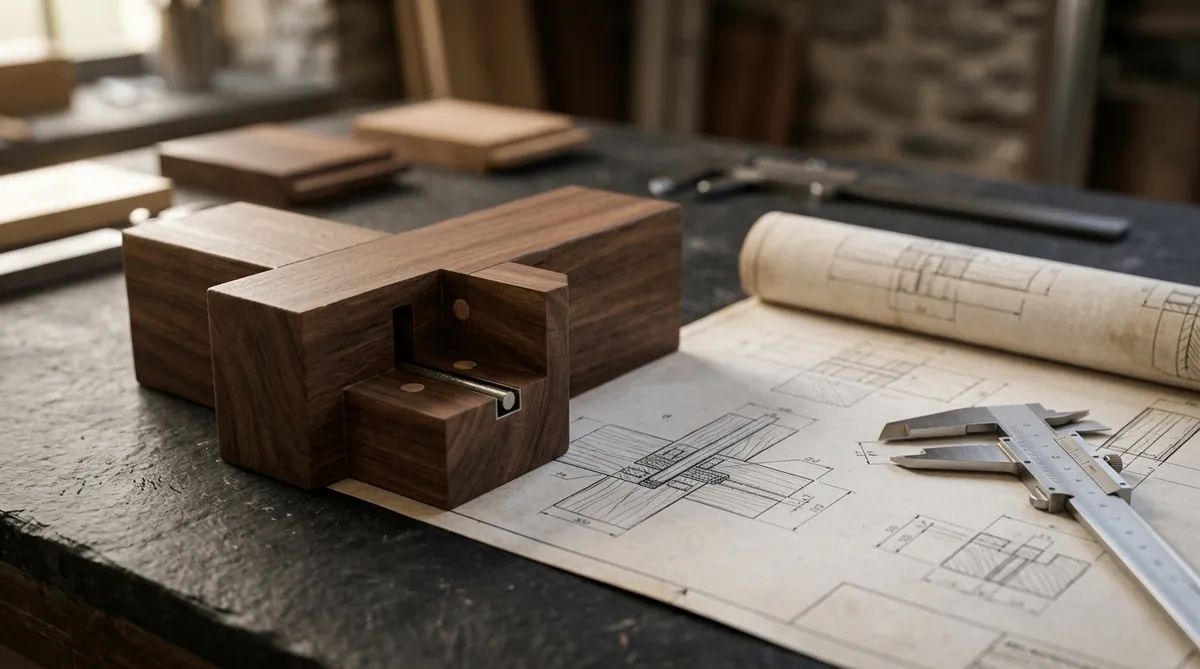
- Finite Element Analysis (FEA) replaces manual solid lumber blocking with 5-axis CNC-machined self-locking mortise-and-tenon joints and engineered multi-ply box girders.
- Eliminates human joinery deviations, increasing torsional rigidity by while eliminating of non-structural timber waste.
3. Tiered Hardware Stratification Based on Utilization Frequency
- Deploys Austrian hydraulic soft-close runners rated for 60,000 cycles on high-frequency guestroom desks and wardrobes, while specifying robust commercial-grade hinges on low-frequency service panels, eliminating wasteful specification redundancy.
4. Modular Decoupling of High-Wear Impact Zones
- Luggage bench perimeters, sofa arms, and seat cushions integrate decoupled modular quick-release interfaces, allowing field hot-swaps within 180 seconds without casegoods replacement.
3. Actuarial Quantification: 300-Key Hotel Procurement VE Financial Model
A modelled scenario rather than a record of results: 300 keys, a pre-VE baseline casegoods budget of NTD 80,000,000, a 10-year observation window, and the two cost-reduction routes below.
300-Key Hotel Value Engineering 10-Year Financial Matrix
| Actuarial Parameter | Option A: Material Downgrade | Option B: |
|---|---|---|
| Initial Casegoods CapEx | NT$ 72,000,000 (-10%) | NT$ 65,600,000 |
| Aesthetic Integrity & ADR Impact | ADR drops 8% (Cheap) | 100% Preserved |
| 5-Year Structural Repairs/Repl. | NT$ 18,000,000 | NT$ 0 (Durable) |
| Hardware Failure Room Downtime | NT$ 4,500,000 (Lost) | NT$ 0 (Zero Fail |
| 10-Year Cumulative Sunk Cost | NT$ 94,500,000 | NT$ 65,600,000 |
| 10-Year Net Financial Gain | Severe OpEx Drain | +NT$ 28,900,000 |
Read against that baseline: Option A takes -10% (NTD 72,000,000), Option B takes -18% (NTD 65,600,000), a CapEx spread of NTD 14,400,000. Option A’s five-year structural repairs are carried at NTD 18,000,000 and its hardware-related downtime at NTD 4,500,000, giving a ten-year spread of roughly NTD 28,900,000. Change the key count, the ADR or the replacement rate and those amounts move; the ordering of the two options usually does not.
4. Total Cost of Ownership (TCO): Material Cheapening vs. Sunder Professional VE
10-Year TCO Evaluation: Material Cheapening vs. Sunder Engineered VE
| Evaluation Vector | Subcontractor Value Trashing | Sunder Precision VE |
|---|---|---|
| Aesthetic Quality | Compromised (Foil peels) | 100% Pristine Spec |
| Substructural Rigidity | Weakened, loosens in 2 yrs | CNC Box-Girder +25% |
| Hardware Strategy | Cheap unbranded components | Tiered Allocation |
| 10-Year Maintenance OpEx | High ongoing repair drain | 65% OpEx Reduction |
| 10-Year Cumulative TCO | Baseline (100% + Repairs) | Reduced to 30% |
5. Conclusion: Three Lists to Ask For in a VE Submittal
The territory Value Engineering can actually work in is narrow: the parts a guest never sees and never operates, where material physics and process capability allow a change. It does not fix a cost problem created by the design itself, and it rarely pays on runs below roughly twenty units, where one-off CNC programming and jig costs cannot be amortised and the change ends up dearer than the original.
When reviewing a VE submittal, ask the supplier to split it into three lists: items touching visible face materials (this list should be empty), items changing internal structure (with FEA output or test data attached), and items regrading hardware (with cycle-test reports, brand and model number). If the three lists do not reconcile against the original FF&E schedule, what is on the table is usually not Value Engineering.
Further Reading
- Occupied Hotel Renovation & Phased FF&E Procurement Strategy: 48-Hour Rolling Floor Turnaround, Zero Downtime, and 10-Year TCO Cash Flow Defense
- Baubotanik Ecological Engineering Guide: Botanical Inosculation Mechanics, Negative-Depreciation Self-Healing Structures, and 20-Year TCO Green Asset Moats