Executive Summary
Engineering analysis of hotel interior upgrades, FF&E material longevity, high-wear resistance, and CapEx optimisation.
Spatial Philosophy & Architectural Narrative
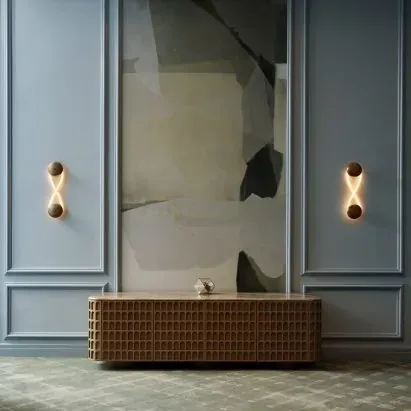
Originally designed by HOK, the interior refurbishment of the Fairmont Hotel Chicago executed by KTGY Interiors Studio addresses critical spatial and lighting deficiencies across 83 premium guestrooms and executive lounges. Urban luxury hotels operating over extended cycles typically suffer from daylight obstruction caused by heavy, dark millwork and restrictive spatial partitioning. The architectural concept reframes room depth by lowering the visual bulk of built-in furniture and optimizing reflective surfaces, thereby facilitating natural light penetration deeper into the living zones. Structurally, this requires non-load-bearing light-gauge steel frameworks combined with thin timber veneers to achieve elevated aesthetic lightness without altering existing building cores. Spatial transitions between private suites and communal lounges are seamlessly articulated through a refined palette of low-chroma white oak, PVD-coated stainless steel, and natural marble. This operational and aesthetic transformation systematically recalibrates the property’s spatial narrative, converting dated architectural gloom into a bright, contemporary hospitality experience aligned with modern operator requirements.
Luxury FF&E Material Engineering & Joinery Breakdown
Premium hotel room FF&E engineering demands rigorous structural specification and precise joinery breakdown to ensure operational durability. Substrate materials for all built-in millwork specify Class F1 (formaldehyde emission ≤ 0.3 mg/L) moisture-resistant hardwood plywood with a thickness swelling rate below 6.0%. Surface veneers utilize 0.6 mm natural white oak bonded with non-benzene two-component waterborne polyurethane coatings, yielding a film thickness of 80-100 μm, abrasion resistance exceeding 1,000 cycles under ASTM D4060, and a color tolerance below Delta E 1.5. Hardware systems incorporate concealed full-extension undermount drawer slides rated for 40 kg dynamic load, tested over 100,000 operational cycles. Cabinet door hinges feature 304 stainless steel 3D-adjustable concealed hinges integrated with hydraulic dampers, rated for 200,000 opening/closing cycles. Metal trims adopt PVD titanium-coated 304 stainless steel with a film thickness of 2.0-3.0 μm and surface hardness exceeding HV 800, passing 96-hour salt spray testing per ASTM B117. Natural stone countertops and wall cladding feature 18 mm natural marble backed with a 2.0 mm fiberglass mesh reinforcement matrix adhered with structural epoxy resin, increasing flexural strength from 8.5 MPa to 14.2 MPa. Upholstery fabrics applied to seating and headboards strictly meet BS 7176 Medium Hazard fire safety requirements (Crib 5 test standard), achieve Martindale abrasion resistance exceeding 50,000 cycles, and satisfy AATCC 118 soil release criteria.
Hospitality Operations, Wear Analysis & TCO Model
From a hospitality asset management perspective, the Total Cost of Ownership (TCO) for guestroom FF&E directly governs long-term CapEx efficiency and asset yield. High-frequency friction points—such as luggage rack perimeters, minibar counters, baseboards, and lounge seating armrests—typically experience surface degradation, stone cracking, or fabric pilling within 24 to 36 months of operation under standard fabrication methodologies. By engineering high-durability solutions, including PVD metal corner guards, composite stone backings, and 50,000+ Martindale cycle textiles, the major maintenance cycle extends from 3 years to 8 years. Financial modeling indicates that while initial CapEx for engineered reinforcement increases by 8% to 12%, it yields a 45% reduction in field repair labor and a 60% decrease in component replacement costs over a 10-year life cycle. Furthermore, implementing modular quick-release mounting assemblies reduces panel repair downtime from 4 hours to 30 minutes, minimizing Out-of-Order (OOO) room revenue loss by 85% and securing robust operational cash flow.
Sunder Engineering Grounding & Subtropical Climate Defense
Hospitality projects located in island and subtropical climates characterized by high ambient humidity (RH 75-85%) require rigorous climate defense protocols during factory fabrication and installation. Wood substrate moisture content must be strictly stabilized between 8% and 12% using microwave equilibrium chambers prior to processing. All concealed structural edges, rear panels, and unexposed surfaces must receive 100% polyurethane sealing coatings to eliminate asymmetric moisture absorption. Joinery connections and metal-to-wood interfaces must incorporate 1.5 to 2.0 mm thermal expansion clearances filled with high-elasticity silicone sealants to dissipate climate-induced mechanical stress. Utilizing modular off-site fabrication with CNC machining precision (tolerance ±0.5 mm) enables 80% of assembly work to occur within climate-controlled factory environments. This manufacturing methodology reduces site wet-work duration by 50% while mitigating moisture-induced warping and maintaining schedule integrity.
B2B Material & Inspection Specification Table
To guarantee compliance across procurement and engineering execution, the following inspection matrix establishes the benchmark standards for hotel FF&E components. Site acceptance mandates strict batch sampling, with non-compliant items rejected prior to installation.
| Component | Specification | Inspection Standard | Tolerance & Criteria |
|---|---|---|---|
| Built-in Millwork | Class F1 MR plywood with 0.6mm white oak veneer | CNS 1349 / ISO 12460 | Formaldehyde ≤ 0.3 mg/L, Swelling ≤ 6% |
| Drawer Slides | Concealed full-extension soft-close, 40 kg rating | ANSI/BIFMA X5.5 | 100,000 fatigue cycles without displacement |
| PVD Metal Trim | 304 Stainless steel PVD titanium coat (2.0-3.0 μm) | ASTM B117 | 96-Hr salt spray pass, Hardness ≥ HV 800 |
| Natural Stone | 18mm Marble with 2.0mm mesh epoxy reinforcement | ASTM C99 / C170 | Flexural strength ≥ 14 MPa, Water abs ≤ 0.2% |
| Seating Upholstery | BS 7176 Medium Hazard fire-retardant fabric | Martindale / ASTM D4966 | Wear resistance ≥ 50,000 cycles, AATCC 118 ≥ Class 4 |