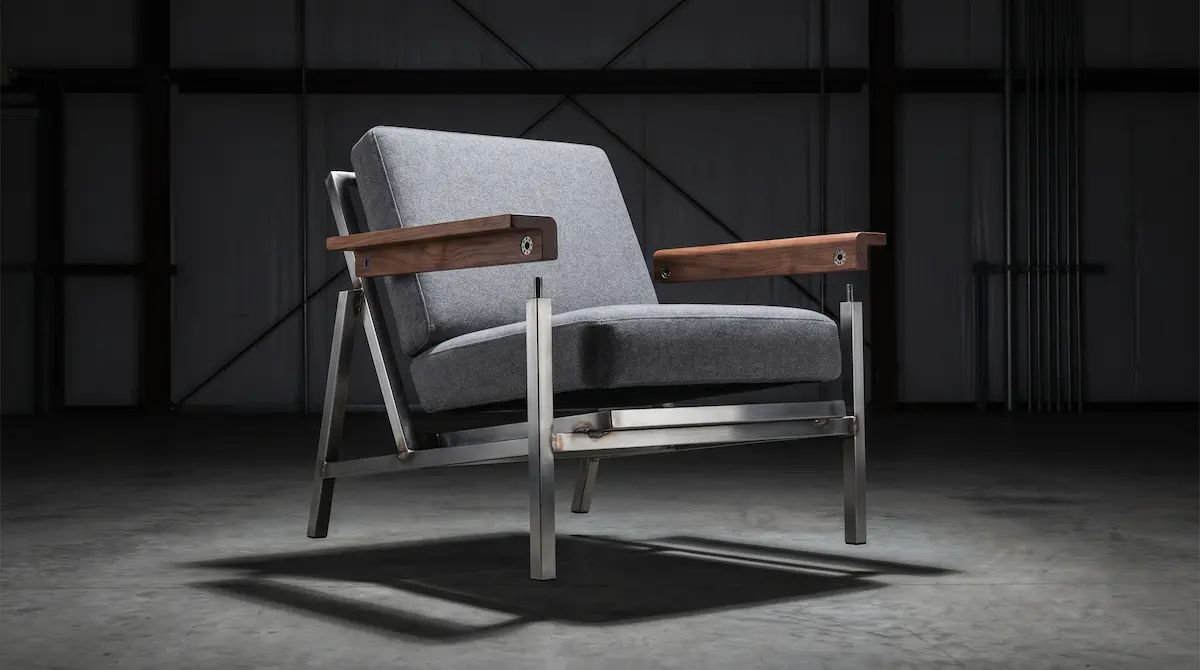
A room attendant strips the bed and finds a cigarette burn in the armchair cushion, under a centimetre across. The work order comes back from engineering saying the whole chair has to go to the shop: the seat is stapled and glued to the timber frame and will not come off intact. The steel frame under that chair has ten years left in it and the foam has five, but the chair’s retirement date is now set by a textile that lasts two to four. Modular design is the attempt to stop one short-lived part from retiring three long-lived ones.
However, in conventional B2B procurement strategies and legacy manufacturing, casework is built as “Monolithic Units”. When upholstered seats, high-resilience foam, timber carcasses, and metal bases are permanently fused together with industrial adhesives and staples, they share an identical asset depreciation lifecycle. Under this outdated paradigm, a single indelible red wine stain or cigarette burn ruins not merely an inexpensive cushion cover, but an entire luxury armchair; a minor luggage cart collision destroys not just a desk leg, but forces the complete write-off of a bespoke guestroom desk.
This “Local Damage Triggers Complete Asset Scrapping” dynamic represents the single largest Financial Bleed in commercial hospitality over a 5- to 10-year horizon.
Sunder integrates B2B Value Engineering (VE) and Decoupled Assembly Mechanics, deploying modular quick-release interfaces so that refurbishment buys components rather than whole units — roughly 20% of replacement cost under the assumptions modelled below.
1. Asset Lifecycle Mismatch & Physical Assembly Decoupling Topology
The individual components comprising commercial furniture possess vastly disparate natural degradation lifecycles:
+-------------------------------------------------------------------------+
|        Commercial Furniture Subsystem Natural Physical Lifecycles       |
+-------------------------------------------------------------------------+
|  [Subsystem 1: Metal Base / Q235B Welded Frame] ──► Lifespan >= 15-20 Yrs
|  [Subsystem 2: E0 Multi-Ply Hardwood Carcass]   ──► Lifespan >= 10-12 Yrs
|  [Subsystem 3: 50D High-Resilience Cold Foam]   ──► Lifespan 5-7 Yrs    |
|  [Subsystem 4: Upholstery Textile / Leather]    ──► Lifespan 2-4 Yrs    |
+-------------------------------------------------------------------------+
+-------------------------------------------------------------------------+
| Conventional Monolithic Assembly vs. Sunder Modular Decoupling Model |
+-------------------------------------------------------------------------+
| 【Conventional Monolithic Construction (Permanently Glued & Stapled)】 |
| Burned textile spot ──► Cannot be field-serviced ──► Full asset scrap |
| ➔ 300 Keys repurchased at NT$ 9,000,000 + Out-of-Order downtime losses|
| |
| 【Sunder Modular Decoupled Joinery (Physical Component Isolation)】 |
| ┌─────────────────────────────────────────────────────────────────┐ |
| │ Independent Cushion Module (M8 Bushings) ──► 3-Min In-Room Swap │ |
| ├─────────────────────────────────────────────────────────────────┤ |
| │ Detachable Armored Metal Leg (Standard Flange) ──► 5-Min Swap │ |
| ├─────────────────────────────────────────────────────────────────┤ |
| │ Permanent Rigid Steel Subframe (360° TIG) ──► 15-Year Zero Scrap│ |
| └─────────────────────────────────────────────────────────────────┘ |
| ➔ Year 5 Refurbishment replaces ONLY cushion modules ➔ NT$ 1.62M (-82%)|
+-------------------------------------------------------------------------+2. 4 Core Commercial Modular Decoupling Details & Standardized Fastening
Sunder standardizes quick-swap mechanical interfaces across all high-wear casework components:
1. Independent Cushion Modules (3-Minute Rapid Swap)
- Armchair and sofa cushions utilize independent structural sub-bases secured via hidden M8 case-hardened steel threaded bushings.
- Housekeeping or engineering staff swap out a damaged seat in 180 seconds inside the guestroom using a hex wrench, so the room does not go out of order for one cushion.
2. Detachable Metal Plinths & Armored Leg Subsystems
- Desks, credenzas, and luggage racks incorporate standardized heavy-duty metal flange interfaces.
- When a table leg suffers cart damage, staff unscrew the damaged leg and install a replacement unit in minutes, preserving the expensive hardwood tabletop.
3. Modular Headboard Wall Tile Systems (French Cleat Cleating)
- Large upholstered headboards are divided into modular tiles mounted via interlocking aluminum French cleat tracks.
- A wine-stained tile is unhooked and swapped upward without dismantling entire millwork feature walls.
4. Magnetic Quick-Release Mini-Bar Servicing Modules
- Countertops incorporate high-strength neodymium magnetic latches, permitting single-handed, tool-free access to internal MEP wiring and appliances.
3. Actuarial Quantification: Complete Replacement vs. Modular Refurbishment
Actuarial lifecycle financial modeling for a 300-key luxury property with an initial NTD 30,000,000 FF&E CapEx budget:
300-Key Hotel 10-Year FF&E Refurbishment & Maintenance Actuary
| Actuarial Parameter | Monolithic Furniture | Sunder Modular |
|---|---|---|
| Year 5 Refurbishment Scope | 100% Full Asset Scrap | Replace Cushions |
| Year 5 Capital Outlay | NT$ 30,000,000 (100%) | NT$ 5,400,000(18) |
| Refurbishment Room Downtime | 30 Days (Full closure) | 0 Days (In-room) |
| Net OOO Revenue Lost (Downtime) | NT$ 40,500,000 (Lost) | NT$ 0 (Zero Loss) |
| Routine Spot Repair Cost | NT$ 15,000 / event | NT$ 1,200 / event |
| 10-Year Cumulative Cash Outflow | NT$ 75,000,000+ | NT$ 6,800,000 |
| 10-Year Net Capital Preserved | Baseline (100%) | Saves NT$ 68.2M |
The table models 300 keys, an initial FF&E CapEx of NTD 30,000,000, refurbishment in year 5, an ADR of NTD 6,000 and 75% occupancy: the year-5 outlay falls from NTD 30,000,000 to about NTD 5,400,000. Change any single assumption and the ten-year difference moves; the one that moves it most is which year the refurbishment lands in.
4. ESG Decarbonization & Scope 3 Supply Chain Benefits
Modular engineering directly accelerates corporate ESG decarbonization targets:
- 80% Solid Waste Reduction: 80% of steel and timber frameworks stay in service through the refurbishment cycle instead of going to landfill.
- 75% Logistics Carbon Footprint Reduction: Replacement modules occupy only 15% of the volumetric freight space of fully assembled furniture, drastically cutting cross-border shipping container demands.
5. Total Cost of Ownership (TCO): Monolithic Build vs. Sunder Modular Decoupling
10-Year TCO Evaluation: Monolithic Build vs. Sunder Modular Decoupling
| Evaluation Vector | Monolithic Glued Build | Sunder Decoupled VE |
|---|---|---|
| Spot Damage Resolution | 100% Full Unit Scrapping | 3-Minute Field Swap |
| Year 5 Re-Skinning Cost | 100% Full CapEx Outlay | 18% ~ 22% of CapEx |
| Refurbishment Downtime | High (Weeks of room closure) | Zero Downtime |
| Maintenance Payroll | High (Carpenters required) | Housekeeping staff |
| 10-Year Cumulative TCO | Baseline (100% + 2 Scraps) | Reduced to 25% |
6. Conclusion: Unlocking Institutional Profitability Through Decoupled Topology
In luxury hospitality asset management, durability is not making every part unbreakable; it is letting the part that fails first be replaced on its own.
Sunder standardizes physical joinery decoupling, M8 threaded quick-release interfaces, and modular tile architectures across all manufacturing lines. Modularity does not pay everywhere: on low-value items, on one-piece moulded forms, and on components that are rarely replaced, the quick-release hardware costs more than a straight repurchase. Before award, ask the supplier which components are independently replaceable, their spare part numbers and the minimum order quantity — those three answers decide whether the swap is still possible in year five.