Executive Summary
This whitepaper analyzes the design and engineering challenges of luxury hospitality projects in high-humidity, high-temperature Asia-Pacific environments. Sunder Engineering offers comprehensive insights from spatial philosophy, FF&E material engineering, and Total Cost of Ownership (TCO) models, to subtropical climate defense strategies. We meticulously break down critical metrics such as wood substrates, hardware fatigue life, PVD titanium plating, and fabric durability, providing concrete procurement and acceptance standards to safeguard asset value and operational resilience.
Spatial Philosophy & Architectural Narrative
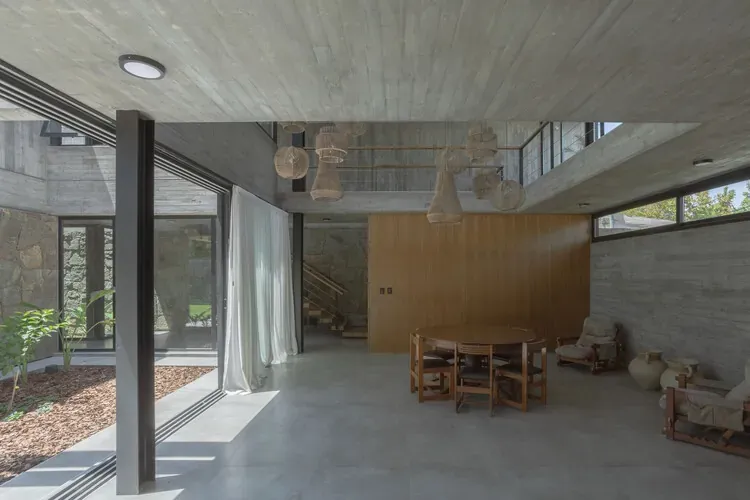
In contemporary luxury hospitality design, architecture transcends mere physical structure, serving as a vessel for brand ethos and immersive experiences. Taking a recent high-end private residence as an archetype, situated within a low-density urban fabric and surrounded by lush greenery, the core design philosophy centered on reinforcing the symbiotic relationship between the edifice and its natural environment, forging a seamless transition from public to private domains. This project’s spatial philosophy epitomizes a profound interpretation of ‘sense of place,’ utilizing astute architectural massing to maximize the integration of external landscapes into interior spaces. The arrival sequence, designed with an inviting yet exclusive demeanor, guides guests progressively from urban bustle into a tranquil sanctuary. The masterful application of natural light stands as a pivotal design highlight; expansive floor-to-ceiling windows, courtyards, and strategic apertures transform light into an intangible sculptor of spatial hierarchy and ambiance. From the soft glow of dawn to the golden hues of dusk, interplay of light and shadow animates interior furnishings and wall textures, imbuing the space with vibrant vitality.
The designers meticulously orchestrated the transition of spatial experiences: from expansive public gathering areas such as the grand lobby and panoramic restaurant, to semi-private contemplative corridors, and finally into the supremely private guest rooms and suites, each phase of transition was meticulously planned. This sense of layering is manifested not only in the spatial layout but is further accentuated by subtle shifts in flooring, wall materials, and furniture arrangements. For instance, public zones might feature durable stone and darker wood joinery, cultivating an air of gravitas; while guest rooms transition to tactile solid woods and soft textiles, offering intimacy and comfort. Here, the brand experience extends beyond mere insignia or service, forging an unspoken connection with guests through architectural vernacular, material selection, and spatial narrative. Every facet of the architecture, from the bespoke fabrication of large-scale FF&E to the nuanced orchestration of lighting, is geared towards fostering a dialogue with the natural environment and conveying a thoughtful luxury. This relentless pursuit of detail is precisely what distinguishes premium hospitality, offering not merely a place of rest, but an enriching journey that resonates with its surroundings and elevates the spirit.
Luxury FF&E Material Engineering & Joinery Breakdown
Premium FF&E (Fixed Furniture & Equipment and Loose Furniture) in luxury hospitality spaces are not merely aesthetic elements; they are critical carriers of operational function and asset value. Sunder Engineering, for such projects, insists on exceeding conventional standards in material selection and fabrication methodologies. For wood substrates, we specify F1-grade moisture-proof low-formaldehyde solid plywood, whose formaldehyde emission is significantly below national standards (CNS 2215, average < 0.3 mg/L), ensuring superior indoor air quality. This plywood boasts excellent flexural strength and dimensional stability, effectively resisting warping and delamination, particularly in Taiwan’s subtropical high-humidity environment. All exposed edges undergo double-sided moisture-proof edge banding and finish coating to prevent moisture ingress. Internal structures predominantly utilize mortise and tenon joints combined with mechanical fasteners, rather than simple adhesive bonding, to ensure long-term structural stability and load-bearing capacity. For instance, the edges of desks or TV console tops are designed to withstand instantaneous impact loads of up to 80 kg without deformation.
Hardware load-bearing capacity and hinge fatigue life are central to FF&E durability. We specify brands like Blum or Hettich, whose soft-close hinges and drawer slides pass stringent EN 15570 Level 3 tests, with a fatigue test standard of 200,000 open-close cycles without failure, far exceeding the 80,000 cycles for typical residential use. For example, guest room wardrobe door hinges are adjustable three-dimensional types, with a maximum load capacity of 25 kg per door leaf, ensuring smooth operation and precise alignment even after prolonged high-frequency use. Drawer slides are full-extension, heavy-duty types with a load capacity of 45 kg, equipped with soft-closing mechanisms for silent, smooth operation and enhanced longevity.
Metal trimming typically employs PVD (Physical Vapor Deposition) titanium-plated stainless steel, as opposed to traditional electroplating or powder coating, to provide exceptional abrasion resistance, corrosion resistance, and color stability. PVD coatings can achieve a thickness of 0.5-2 microns and a hardness of HV 1500-2000, significantly surpassing traditional electroplating (HV 200-400), effectively resisting scratches and daily cleaning agents. The substrate is 304 or 316 stainless steel, ensuring superior corrosion resistance, particularly suitable for coastal or high-humidity regions. PVD-plated metal trims exhibit extremely low color variance (ΔE < 1.5), guaranteeing visual consistency across all product batches.
In natural stone applications, such as bathroom vanity tops or bar counters, to prevent cracking and enhance structural integrity, large stone slabs are invariably reinforced on the reverse side with fiberglass mesh and epoxy resin backing. This technique increases the stone’s flexural strength by over 30%, effectively distributing stress and reducing the risk of fracture due to thermal expansion/contraction or external impact. Simultaneously, stone cutting and edge-finishing tolerances are controlled within ±0.5 mm, ensuring perfect joints with adjacent wood or metal interfaces, preventing dirt accumulation and enhancing overall visual quality.
Fabric durability and flame retardancy are crucial considerations for upholstery in public areas and guest rooms (e.g., sofas, headboards). We select high-density polyester or blended fabrics with Martindale abrasion resistance exceeding 40,000 cycles, ensuring surface integrity and color saturation are maintained despite high-frequency contact and cleaning. Such fabrics are often treated for water repellency, facilitating easy cleaning and maintenance. Flame retardancy standards adhere to the stringent international BS 7176 Contract (Medium Hazard) standard, achieving Crib 5 fire rating. This rating requires fabrics to self-extinguish shortly after flame exposure without melting or dripping, significantly enhancing public safety in hospitality venues. All fabric suppliers must provide third-party test reports and manufacturer certifications to ensure traceability and compliance with international regulations. Through these precise material selections and fabrication practices, Sunder Engineering ensures FF&E not only attains peak aesthetic luxury but also possesses robust engineering integrity and long-term operational stability.
Hospitality Operations, Wear Analysis & TCO Model
From a hotel owner’s perspective, the initial capital expenditure (CapEx) for FF&E procurement is merely the tip of the iceberg. True long-term value hinges on optimizing the Total Cost of Ownership (TCO). Over a 5-10 year operational cycle, FF&E in guest rooms and public areas face high-frequency wear challenges such as luggage scratches, cleaning agent corrosion, accidental impacts, and mechanical fatigue from frequent opening and closing. Without proactive planning, this wear leads to frequent repairs, replacements, and even impacts guest experience and brand image, thereby generating substantial hidden operational costs (OpEx).
Taking guest room furniture as an example, nightstands, desks, luggage racks, and mini-bar cabinets are high-wear points. Conventional surface finishes might show peeling or edge damage within 2-3 years, necessitating extensive renovation or replacement every five years, with costs per room easily reaching tens of thousands. By utilizing PVD titanium-plated stainless steel trim and highly durable solid wood veneers (e.g., veneer thickness > 0.6mm, with 6 layers of anti-scratch lacquer coating), the lifespan can extend to 8-10 years or more. Assume a 200-room hotel plans to renovate its room furniture every 5 years, with each renovation costing 60% of the new furniture purchase price (including dismantling and installation). If highly durable FF&E extends the renovation cycle to 10 years, one major renovation cost is saved within the same 10-year period, reducing overall TCO by approximately 30-40%.
In public areas such as lobby sofas, dining chairs, and lounge ottomans, fabric abrasion resistance and stain repellency are paramount. Fabrics with Martindale abrasion resistance exceeding 40,000 cycles and water-repellent treatment not only withstand high-frequency use and cleaning but also effectively resist accidental stain penetration, reducing the frequency and cost of professional cleaning. Using standard fabrics might require annual deep cleaning and fabric replacement every 3-5 years; high-standard fabrics extend cleaning intervals and fabric replacement cycles to 7-10 years, significantly reducing maintenance OpEx.
Furthermore, the selection of hardware such as door hinges and drawer slides—opting for heavy-duty hardware tested for 200,000 cycles—results in significantly lower failure rates compared to standard products, drastically reducing repair labor and replacement part costs. A single hinge replacement involves not just the part cost but also labor hours, lost revenue from room downtime, and the risk of guest complaints due to inconvenience. By proactively investing in high-quality FF&E, owners can not only effectively control OpEx but also ensure consistent and exceptional guest experiences, uphold brand reputation, and even maximize room occupancy and revenue by minimizing downtime. This forward-thinking TCO defense model is the cornerstone of advanced hospitality asset management.
Sunder Engineering Grounding & Subtropical Climate Defense
Sunder Engineering, with over two decades of expertise in high-end FF&E manufacturing and project execution, has developed a systematic climate defense and manufacturing strategy specifically for the Asia-Pacific’s subtropical island climates, where relative humidity typically ranges from 75-85%. Such environments pose severe challenges to wood furniture: high humidity can lead to wood expansion, warping, cracking, and coating delamination; while high temperatures accelerate material degradation. To counteract this, Sunder insists on controlling material moisture content from the source. All incoming solid wood and solid plywood undergo rigorous drying and stabilization processes, ensuring that the final moisture content at the time of fabrication is consistently maintained between 8-12%. This range is calculated based on the average annual humidity equilibrium moisture content of the Asia-Pacific region, minimizing dimensional distortion caused by humidity changes.
For moisture defense strategies, all internal and external surfaces, edges, and concealed parts of wood furniture are treated with double-sided moisture-proof sealing lacquer. This includes primers, topcoats, and specialized moisture barriers, forming a comprehensive defense against humidity penetration. We also utilize PU coatings or water-based eco-friendly coatings, which offer superior water resistance, flexibility, and adhesion, effectively blocking moisture ingress. Components prone to moisture, such as drawer bottoms and cabinet back panels, are further enhanced with high-density moisture-resistant boards or laminated finishes. For metal components like PVD titanium-plated stainless steel, their excellent corrosion resistance is emphasized, ensuring no rusting occurs in high-humidity, salt-spray environments.
Mortise and tenon stress pre-allocation is a core aspect of Sunder’s craftsmanship. In structural joints, particularly for solid wood furniture, we employ precise mortise and tenon joinery, and from the initial design phase, we account for the minute expansion and contraction of wood due to humidity changes, allowing for appropriate clearance tolerances. This not only enhances structural stability and load-bearing capacity but also allows the wood to ‘breathe’ with environmental shifts, preventing cracking caused by stress concentration. For instance, connections between large dining or conference tabletops and legs utilize floating mortise and tenon joints or metal expansion bolts with elastic pads, ensuring all components remain in harmony without destructive stress under extreme temperature and humidity conditions.
Furthermore, Sunder actively promotes a modular prefabrication strategy. Furniture components are precisely cut, drilled, and pre-assembled using CNC machining centers in the factory, then transported to the site as modules for rapid assembly. This approach offers multiple advantages: Firstly, it ensures that the moisture content, dimensional accuracy, and coating quality of each component meet the highest standards within a strictly controlled factory environment, reducing on-site construction uncertainties and quality risks. Secondly, it significantly shortens the on-site construction period, minimizing disruption to hotel operations, thereby saving time and costs for the owner. For example, fixed furniture for a standard guest room, through modular prefabrication, can reduce on-site assembly time from a traditional 3-5 days to 1-2 days. This precise and efficient execution capability is key to Sunder Engineering’s ability to deliver long-term value and exceptional quality to clients in the high-humidity, high-temperature Asia-Pacific region.
B2B Material & Inspection Specification Table
To ensure FF&E procurement meets the stringent standards of luxury hospitality and the specific demands of subtropical climates, the following B2B Material & Inspection Specification Markdown Table is provided. This table serves as a common language between owners, contractors, and manufacturers, ensuring consistent quality and performance across all supply chain segments. Purchasers should request third-party test reports from suppliers and conduct random sampling inspections upon delivery to verify compliance.
| Component Item | Material & Process Specification | International Inspection Standard | Acceptance Tolerance/Indicator |
|---|---|---|---|
| Wood Substrate | F1 Grade Moisture-Resistant Low-Formaldehyde Plywood, thickness ≥ 18mm, double-sided sealed coating | CNS 2215 (F1) / EN 312 P5 (Moisture Resistant) | Formaldehyde Emission < 0.3 mg/L; Moisture Content 8-12%; Panel Flatness < 1.0 mm/m |
| Hardware Hinges/Slides | Soft-Close Steel Hinges/Full-Extension Heavy-Duty Slides, Specified Brand (e.g., Blum/Hettich) | EN 15570 (Level 3) / ANSI BHMA A156.9 | Fatigue Test 200,000 Cycles without failure; Max Load Capacity 25kg (Hinge) / 45kg (Slide) |
| Metal Trimming | 304/316 Stainless Steel PVD Titanium Coated, Film thickness ≥ 0.8µm, Hardness ≥ HV1500 | ASTM B117 (Salt Spray) / ISO 9227 | Salt Spray Test > 200 Hours without rust; Color difference ΔE < 1.5; Adhesion ASTM D3359 5B |
| Natural Stone | Natural Marble/Granite, Backed with Fiberglass Mesh and Epoxy Resin | ASTM C1726 (Flexural Strength) / EN 12058 | Flexural Strength increase ≥ 30%; Cutting Tolerance ±0.5mm; Surface Flatness < 0.5mm/m |
| Upholstery Fabric | High-Density Polyester or Blend, Martindale Abrasion ≥ 40,000 Cycles, Crib 5 Fire Retardant | EN ISO 12947 (Martindale) / BS 7176 (Crib 5) | Abrasion 40,000+ cycles without significant wear; Flammability conforms to Crib 5; Colorfastness ≥ Grade 4 |
| Surface Coating | Six-layer PU or Water-based Eco-friendly Topcoat, Scratch & Abrasion Resistant, Specified Sheen | ASTM D3363 (Pencil Hardness) / ASTM D4060 (Abrasion) | Pencil Hardness ≥ H; Abrasion Index > 5000 Cycles (CS-10 wheel); Sheen 30-50% (Semi-matte) |
Acceptance Guidelines:
- Document Verification: Require all material suppliers to provide corresponding international standard test reports, original manufacturer certifications, and factory quality assurance certificates.
- Visual Inspection: Conduct a visual inspection of furniture for flatness, color consistency, integrity of surface finishes, and whether edge treatments are smooth and burr-free. Metal trims should be free of scratches, dents, and exhibit uniform color. Stone patterns should match samples, without significant color variations or cracks.
- Functional Testing: Perform repeated open-close tests on all movable components (doors, drawers, hinges, slides), assessing their smoothness, soft-closing effect, and positioning accuracy. Check structural stability for any wobbling or unusual noises.
- Dimensional Measurement: Use precision measuring tools to verify critical dimensions, ensuring they are within specified tolerances. Dimensional accuracy is particularly crucial for multi-component assemblies or parts connected to architectural interfaces.
- Sampling for Testing: For high-value or high-risk materials, it is recommended to randomly select samples from incoming batches and send them to a third-party laboratory for independent testing to verify their chemical composition, physical properties, and flame retardancy levels.