Executive Summary
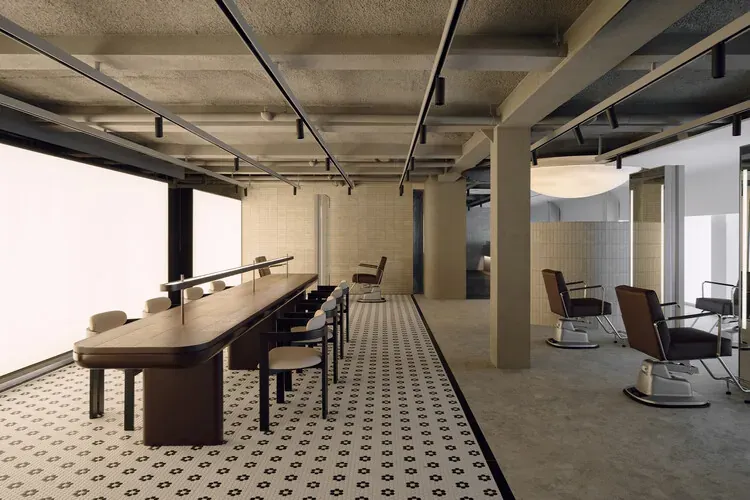
Juno Hair Sung-su masterfully intertwines industrial legacy with contemporary aesthetics through spatial contrasts, brilliantly embodying the unique urban evolution of the Sung-su district.
Analytical Insights
- Spatial Narrative and Contrasting Aesthetics: Juno Hair Sung-su ingeniously leverages the district's industrial heritage by employing strong spatial contrasts – rough vs. refined, past vs. future, natural vs. artificial – to create multi-layered visual and emotional experiences, allowing patrons to feel the unique urban context and artistic ambiance within the salon.
- Material Language and Craftsmanship Durability: In designs reflecting an industrial landscape, material selection is paramount. The design must consider how to artfully integrate raw concrete, metal, and other industrial elements with warm wood, delicate glass, or textiles. This not only maintains a highly recognizable style but also ensures durability, ease of cleaning, and long-term aesthetic appeal under high commercial traffic, balancing initial investment with maintenance efficiency.
- Commercial Experience and Brand Asset Appreciation: For the owner, such a distinctive spatial design is not only crucial for attracting clientele "seeking novelty and rarity" but also an effective strategy for brand differentiation and enhancing customer loyalty. Through unique experiential settings, Juno Hair transforms its service into a cultural exploration, thereby increasing brand market value and long-term return on investment (ROI).
- Integration of Local Culture and Future Trends: This project exemplifies a successful integration of a unique regional background (like Sung-su's industrial regeneration) into commercial spatial design. This trend highlights that commercial spaces are no longer merely functional venues but cultural carriers that tell local stories and offer immersive experiences, foreshadowing a future where design increasingly emphasizes regional connectivity and community interaction.