Executive Summary
Analyzing historic hotel upgrades, facade metals, bespoke joinery engineering, and TCO control in humid environments.
Spatial Philosophy & Architectural Narrative
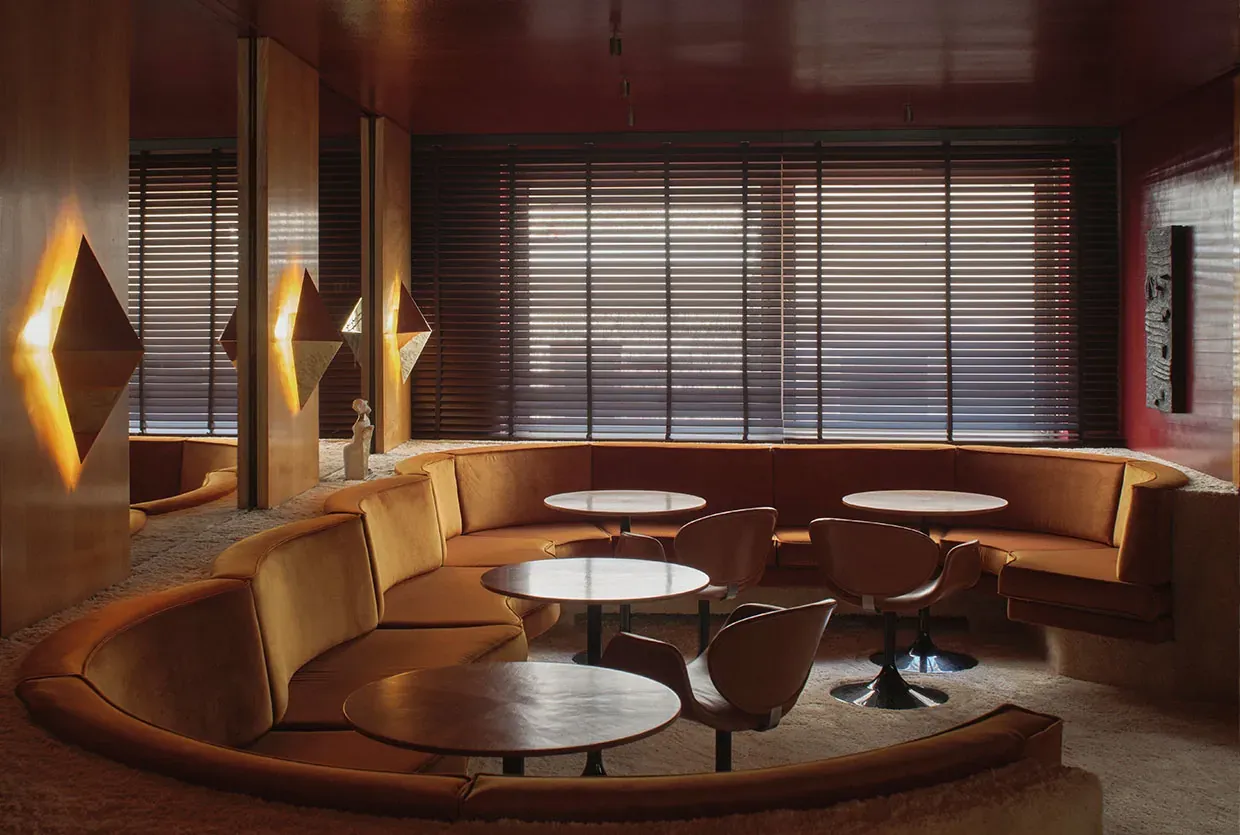
The renovation of Hotel Aurora along Merano’s Passer Promenade, led by Hannes Peer Architecture and Feld72, demonstrates an intervention strategy defined as ‘don’t erase, amplify.’ The architectural narrative integrates historic masonry with a dynamic aluminum facade system. Anodized aluminum exterior panels are engineered to alter reflection according to solar angles, harmonizing the building envelope with seasonal light changes. Interior spatial orientation centers around a curated Listening Bar, acting as a functional transition zone between public areas and private suites. Material selections incorporate custom Murano glass fixtures and artisanal ceramic bas-reliefs, establishing tactile continuity across circulation paths. Architectural lighting is recalibrated to 2700K color temperature with CRI 95 LED arrays, housed within concealed architectural coves to highlight historic texture without visual glare. From an engineering perspective, this project emphasizes precise expansion joints between retrofitted metal cladding and legacy structural walls, requiring strict tolerance management of +/- 1.0 mm. By integrating bespoke craft with systematic structural retrofitting, the design creates an authentic spatial narrative while modernizing operational functionality and guest engagement for decades to come.
Luxury FF&E Material Engineering & Joinery Breakdown
The engineering of fixed furniture and millwork for upscale hospitality projects demands strict compliance with mechanical and material standards. Cabinetry substrates are specified as F1-grade moisture-resistant plywood with formaldehyde emissions below 0.3 mg/L and a core density of 680 to 720 kg/m3. Surfaces feature 0.6 mm natural smoked oak veneers sealed with three coats of polyurethane primer and two coats of waterborne polyurethane topcoat, reaching a dry film thickness of 80 to 100 microns for enhanced chemical and scratch resistance.
Hardware selection dictates long-term operational performance. Cabinet door hinges utilize AISI 304 stainless steel 3D-adjustable concealed hinges, tested under EN 15570 standards to withstand 200,000 operational cycles without structural sag. Drawer runners are under-mount full-extension soft-close slides rated for a dynamic load capacity of at least 45 kg per pair. Metallic metal trims integrated into headboards and wall paneling utilize Physical Vapor Deposition (PVD) titanium-coated stainless steel. The PVD coating includes a 15-micron anti-fingerprint clear layer, achieving zero corrosion after 480 hours of ASTM B117 salt spray testing.
Natural stone countertops, specified at 20 mm thickness, incorporate back-face reinforcement using 300 g/m2 fiberglass mesh laminated with high-strength epoxy resin to prevent structural cracking. Stone surfaces are treated with a triple-pass nano-penetrating sealer, achieving Grade A stain resistance against water and oil. Upholstered seating elements within the Listening Bar and lounge areas specify technical textile blends exceeding 45,000 cycles on the Martindale abrasion test. Foam cushioning utilizes high-resilience polyurethane foam with a density of 45 kg/m3. All flexible padding and fabric assemblies comply with BS 7176 Medium Hazard standards, successfully passing the Crib 5 flaming ignition source test with a peak heat release rate under 5.2 kW. This integration of certified raw materials ensures structural longevity and severe fire safety compliance across all front-of-house hospitality environments.
Hospitality Operations, Wear Analysis & TCO Model
Hospitality asset management requires precise total cost of ownership (TCO) modeling to optimize capital expenditure (CapEx) over a 10-year operating cycle. High-frequency wear points such as luggage benches, minibar alcoves, and bedhead surrounds experience continuous localized impact. Replacing vulnerable veneer edges with R5 mm solid hardwood radius profiling or PVD stainless steel protective edging reduces edge delamination by up to 70 percent.
Traditional Medium-Density Fiberboard (MDF) substrates frequently experience moisture swelling and structural failure around years 3 to 4, triggering premature maintenance spend. By specifying F1-grade moisture-resistant plywood and PVD titanium metal trimming during initial procurement, upfront CapEx increases by approximately 8 to 12 percent. However, this material strategy extends the full FF&E refurbishment cycle from 5 years to 8-10 years.
A 10-year TCO financial analysis for a typical 100-key property indicates that this engineering approach reduces ongoing maintenance labor hours by 35 percent and spare parts stock holding requirements by 40 percent. Consequently, annualized asset depreciation costs drop by 18 percent, directly strengthening the property’s overall Net Operating Income (NOI) and protecting institutional asset value.
Sunder Engineering Grounding & Subtropical Climate Defense
In subtropical and coastal island climates, ambient relative humidity consistently ranges between 75 and 85 percent, presenting severe challenges to wood joinery stability. Factory manufacturing protocol requires strict kiln-drying protocols to hold wood moisture content between 8 and 12 percent, aligning with local Equilibrium Moisture Content (EMC). Cabinet doors and wall paneling must undergo symmetrical sealing—applying identical polyurethane coatings to rear and front faces to prevent differential moisture vapor transmission and subsequent warping.
Structural joinery designs incorporate engineered expansion gaps of 1.5 to 2.0 mm at frame joints, sealed with high-elasticity polyurethane compounds to absorb thermal and hygroscopic movements. Off-site modular fabrication strategies are recommended for all millwork units. CNC machining centers handle key routing, hardware cutouts, and cable management ports prior to flat-pack shipment, maintaining strict manufacturing tolerances within +/- 0.5 mm. Site installation relies on dry assembly hardware, reducing on-site construction timelines by 40 percent while eliminating dust contamination and moisture exposure during installation.
B2B Material & Inspection Specification Table
The following inspection specification table outlines the engineering criteria for hospitality FF&E procurement, establishing rigorous benchmarks for quality control and site acceptance.
| Component | Specification | Inspection Standard | Tolerance & Criteria |
|---|---|---|---|
| Wood Substrate | F1 Moisture-Resistant Plywood | CNS 1349 / GB/T 17657 | Formaldehyde ≤ 0.3 mg/L, Swelling ≤ 8% |
| Veneer Coating | Smoked Oak + Waterborne PU | ISO 2409 / ASTM D3359 | Thickness 80-100 μm, Cross-hatch 5B Class |
| Metal Trims | PVD Titanium 304 Stainless Steel | ASTM B117 / ISO 9227 | 480h Salt Spray Pass, Tolerance ±0.3 mm |
| Joinery Hardware | AISI 304 Hinges & Soft-close Slides | EN 15570 / ANSI BHMA | 200k Cycles Pass, Load Capacity ≥ 45 kg |
| Fire Fabric | 45 kg/m³ Foam + Durable Textile | BS 7176 / ISO 12947-2 | Crib 5 Pass, Martindale Abrasion ≥ 45k |