Executive Summary
Technical guide for curved lounge chairs addressing high-frequency wear and moisture defense in commercial spaces.
Spatial Philosophy & Architectural Narrative
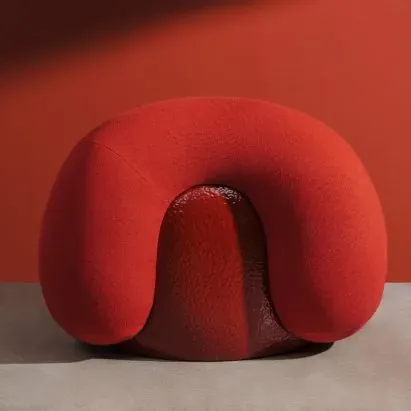
In contemporary hospitality and commercial real estate planning, furniture functions as a critical micro-architectural element that actively shapes spatial narrative and guides guest circulation. Organic-shaped lounge chairs, with their bulbous, pebble-like geometries, actively soften the rigid orthogonal lines typical of luxury hotel lobbies and executive lounges, establishing highly intuitive, biophilic zones. This continuous, looping silhouette provides an unobstructed 360-degree aesthetic view, allowing the piece to serve as a freestanding sculptural installation in open-plan spatial configurations rather than being pushed against walls. When natural light or architectural luminaires wash over these complex curved surfaces, they produce subtle, graduated shadows rather than the harsh, high-contrast lines generated by traditional linear forms. Furthermore, the complete absence of sharp corners optimizes pedestrian traffic flow within high-density environments, practically reducing accidental impacts and transforming safety engineering into intuitive spatial comfort. This design approach elevates public lounges into highly curated gallery spaces, communicating a sense of relaxed sophistication that aligns with modern luxury hospitality branding. By utilizing modular organic clusters, hotel operators can effortlessly reconfigure seating arrangements to host either private business discussions or open social gatherings, thereby optimizing real estate yield per square meter.
Luxury FF&E Material Engineering & Joinery Breakdown
Translating organic curved furniture designs into high-durability hospitality-grade FF&E requires a rigorous engineering approach to counteract complex multi-axial structural stresses. To begin, the structural substrate forms the core of the furniture’s physical lifespan. Standard commercial specifications require the internal frame to utilize F1-grade, low-formaldehyde, moisture-resistant multi-layered hardwood plywood with a minimum thickness of 18mm. Using high-frequency thermo-compression molding, the plywood is pressed into custom-engineered steel molds to achieve a consistent bending strength exceeding 85 MPa. At critical high-stress interfaces—such as the junction between the seat frame and the sweeping backrest—the components must be joined using five-axis CNC-machined mortise-and-tenon joints. These joints are further reinforced with 3mm-thick hot-rolled steel L-brackets and bonded using dual-component polyurethane (PU) structural adhesives. This structural configuration is designed to withstand a minimum tensile pull-out force of 1,500 N, preventing structural fatigue when guests apply leverage to the backrest. The cushioning system is engineered to preserve the organic silhouette and prevent sagging over years of continuous use. It features dual-density, cold-molded polyurethane foam. The load-bearing core layer is specified at a density of 60 kg/m³ with an Indentation Load Deflection (ILD) of 50±5, providing structural support. This is wrapped in a comfort layer with a density of 45 kg/m³ and an ILD of 30±5. Under ASTM D3574 testing protocols, this foam assembly must undergo 100,000 cycles of constant-force fatigue pounding, limiting thickness and indentation loss to under 4% to maintain the chair’s structural profile. Upholstery selection must address physical elongation constraints. To prevent localized wrinkling on curved surfaces, the fabric must exhibit isotropic elasticity, with elongation variance restricted to under 5% between the warp and weft directions. The textile must achieve a minimum rating of 50,000 rubs on the Martindale scale. For fire safety, the completed assembly must comply with BS 7176 Medium Hazard (Crib 5) standards, utilizing inherently flame-retardant fibers or a halogen-free chemical back-coating to restrict peak heat release rates. Finally, the metal base trim is fabricated from SUS304 stainless steel with a minimum thickness of 1.5mm. The steel undergoes PVD (Physical Vapor Deposition) titanium plating, yielding a protective film thickness of at least 1.2 microns and a surface hardness exceeding HV 800 to resist scratches from cleaning equipment. A 2mm engineering reveal joint is integrated at the steel-to-upholstery interface, securing a flush transition and protecting the fabric edges from mechanical fraying. Additionally, the molded foam is encapsulated in a moisture-barrier interliner that prevents liquid spills from penetrating into the core, simplifying maintenance. The PVD metal base must undergo a 96-hour neutral salt spray test (ISO 9227) without showing signs of red rust or surface pitting, ensuring durability against wet-mopping operations.
Hospitality Operations, Wear Analysis & TCO Model
During ongoing hotel operations, lounge chairs located in high-traffic public spaces experience severe physical wear. The front of the armrests is subject to body oil degradation, the seat cushion front suffers constant compression, and the lower perimeter is repeatedly struck by luggage and cleaning carts. Selecting low-cost domestic furniture frequently leads to foam collapse, fabric pilling, or joint failure by year 3, forcing complete asset replacement and inflating CapEx. An asset-management-focused Total Cost of Ownership (TCO) model proves that investing in professional-grade FF&E delivers substantial long-term savings. Specifying commercial lounge chairs with high-density molded foam and stain-resistant treated textiles (AATCC 130 Grade 5) increases initial procurement costs by approximately 35% compared to domestic alternatives, but extends the operational lifespan from 3 years to 9 years. Consider a financial comparison per seating unit over a 9-year hotel renovation cycle: Standard seating carries an initial cost of 2,100 USD. Engineered modular seating carries an initial cost of 150 USD. The cumulative 9-year TCO is $1,100 USD. This approach yields a 47.6% reduction in cumulative asset expenditures, directly optimizing the property’s operational cash flow and demonstrating superior asset management efficiency.
Sunder Engineering Grounding & Subtropical Climate Defense
The coastal climates of the Asia-Pacific region exhibit high temperatures and high humidity, with relative humidity averaging 75% to 85%. This environment poses significant risks to the dimensional stability and fungal resistance of wood-based FF&E. To counter these challenges, strict equilibrium moisture content (EMC) management is required. All structural solid woods and plywood substrates must undergo kiln-drying, stabilizing their internal moisture content between 8% and 12% prior to production. Additionally, comprehensive moisture-barrier sealing must be applied to all unexposed, internal wooden surfaces. Specifying a double-sided, two-coat polyurethane (PU) sealer with a minimum dry film thickness of 80 microns creates a robust vapor barrier, preventing moisture absorption and subsequential substrate warping. Furthermore, due to the different thermal expansion coefficients of dissimilar materials, a 1.5mm movement joint must be engineered at the interface between the metal base and the timber frame, backfilled with neutral-cure, anti-fungal silicone to absorb volumetric changes. Finally, to minimize humidity exposure during on-site construction, complete factory prefabrication is advised. Assembling and upholstering the lounge chairs within a climate-controlled facility (22±2°C, 55±5% RH) ensures that assembly tolerances are held within ±0.5mm. This modular manufacturing approach minimizes manual on-site adjustments, ensuring high-precision installation under challenging coastal conditions.
B2B Material & Inspection Specification Table
| Component | Specification | Inspection Standard | Tolerance & Criteria |
|---|---|---|---|
| Internal Frame | F1-grade moisture-resistant plywood, 8-12% MC, CNC joints | EN 312 / CNS 1349 | Bending strength >= 85 MPa, shear strength >= 1.0 MPa |
| Cushioning Foam | Dual-density cold-molded PU, core density 60kg/m³, outer 45kg/m³ | ASTM D3574 / ISO 3385 | Thickness loss <= 4% after 100k fatigue cycles |
| Upholstery Textile | High-performance stain-resistant fabric, inherently flame-retardant | Martindale / BS 7176 | Wear cycles >= 50,000, complies with Medium Hazard (Crib 5) |
| Metal Base Trim | SUS304 stainless steel base with PVD titanium coating | ASTM B117 / ISO 9227 | Coating thickness >= 1.2μm, hardness >= HV 800, 96h salt spray OK |
| Joint Assembly | Interface reveals and expansion joints at material transitions | ISO 4859 | Alignment gap <= 0.5mm, step-height tolerance <= 0.3mm |
These technical specifications serve as the baseline criteria for hospitality quality control. During the hand-over phase, project managers must perform rigorous audits on all items. First-article inspections require certified laboratory test reports confirming fire retardancy and mechanical fatigue ratings. Field engineers should utilize digital gauges to verify PVD coating thickness and joint tolerances. Ensuring these criteria are met safeguards the durability of the property assets.